- Category:
- News
Smart Move Trial: Driver perceptions in 2010
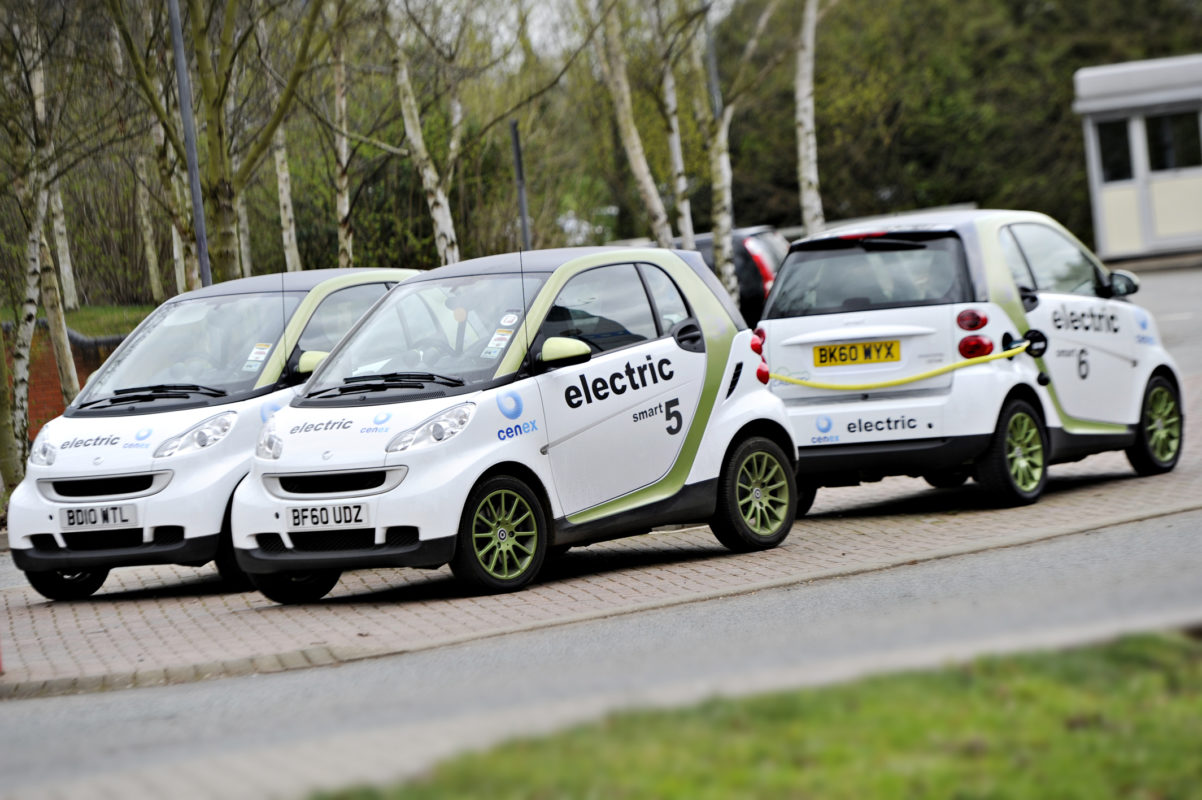
12 years ago, at the advent of modern electric cars, Cenex ran a six-month trial in the North East of England, providing ten organisations with up to four electric two-seater passenger cars to integrate into their fleets.
As separate requests for the report and photos for the 2010 Smart Move Trial recently dropped in the Cenex inbox, here’s a look back at some of the results and progress made since.
At the time, it was one of the most comprehensive trials undertaken in the UK on driver attitudes to electric vehicles.
The vehicle in hand was a ‘smart fortwo ed’ with an average range of 44 miles, 60 mph restricted top speed, and charged from a 13 amp socket at 240 v.
195 individuals drove the cars across the ten organisations, comprising local councils, private companies, and a university, with each organisation using the vehicle for a one-month period.
Below are some findings from the 2010 trial:
- 72 percent of drivers stated they would use an electric vehicle as their regular car. Before the trial, that number stood at 47 percent.
- 88 percent of fleet managers felt more positive about incorporating electric vehicles into fleets, despite a lack of public charging infrastructure.
- 58 percent of fleet users generally felt more positive about electric vehicles after the trial.
- ‘Range anxiety’ was dealt with by preparing before each drive: 93 percent of journeys started with over 50 percent battery charge and average maximum journey length was 25 percent of the typical vehicle’s range capability.
- Test drivers and fleet users in the 20-30 age group experienced the highest opinion shift in favour of electric vehicle ownership.
- Vehicles emissions were the equivalent of 81.4 g CO2/km when charged with UK average grid mix electricity; 45.0 g CO2/km from Combined Heat and Power generation, and 0 g CO2/km from renewable electricity generation.
You can read the full results here: The smart move trial
The trial highlighted that organisations with dedicated charging infrastructure rated the charging experience even higher than those without – showing the importance of an effective public charging provision and the benefits of organisations installing chargepoints on-site in line with expectations.
Electric vehicle technology has evolved considerably in passenger cars since 2010: batteries offer ranges reaching ten times the distance on a single charge; chargepoints are more prevalent; and UK grid electricity is even cleaner.
Steve Carroll, Head of Transport, reflects on the project:
“Even with the early electric vehicles, like the smart car used in this project, generally people had a very positive view – however few thought they would be suitable for their needs.
“When identifying early barriers to EVs in 2010, it was mostly about the vehicles as that was the immediate concern for potential users – that they would be too small, low range, uncomfortable etc.
“Winding on the clock to today and the industry has done a tremendous job of developing comfortable, long range vehicles that are not only nicer to drive than ICE equivalents, they also have better standards of connectivity and infotainment.
“It’s been interesting to see the anxiety over the years change from range anxiety to charging anxiety. Infrastructure is next frontier to overcome in the road to electrification.
“As with all new technology, many have little faith in human ingenuity and assume that barriers and problems to new innovations are unlikely to be overcome (low range, small vehicles, not enough infrastructure, moving emissions from the tail-pipe to the power station and so on).
“These initial barriers are all being addressed successfully one by one which is now (along with some strong regulatory policy) allowing EVs to transition to mainstream transport.”
How far have EVs come in the last decade?
Back in 2010 Cenex ran a 6-month trial, providing 10 organisations with 4 two-seater 'smart cars'. They had an average range of 44 miles. pic.twitter.com/4DwqU2EcEC
— Cenex LCFC (@CenexLCFC) January 23, 2023